

If you are looking for information on the Wine Not Winery franchise business opportunity, Wine Not Winery franchises or Wine Not Wineries franchising, then you have come to the right place.
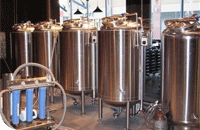
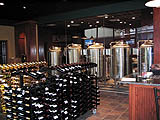
A Custom Winery can produce at least 40 varieties of fine wine with amazing efficiency. In these turnkey establishments, the system is in full view behind glass panels adjacent to the retail and tasting area.
Advanced technology and a proven formula for creating fine wines each and every time, coupled with selection and simplicity put Wine Not in the forefront of customers' minds. Wine Not boasts the highest gross margins in the industry.
This unique concept is enabled by Wine Not's trouble-free modular winery system which was developed through the collective expertise of a specialized team of engineers, oenologists and microbiologists.
 To complement the visual impact, customers visiting the winery are greeted by knowledgeable and personable staff who guide them through the wine making process. Customers are then invited to sample various types of wine as the characteristics of each are described in relaxed and enjoyable surroundings. The customers then purchase their favorite selections, having gained an insight into the wine maker's craft and the quality of the wines.
Franchisees share in the fun and success and benefit from comprehensive training, marketing support, a royalty-free "Quick Start" program, in house order desk support, ongoing support and business improvement resources, three franchisee meetings per year including our annual conference and wine competition.
Franchising can be tailored to suit individual needs and requirements.
Wine Not began as a single unit in 1993 has grown today into 47 Wine Not locations across the USA, Canada and the Caribbean.
 Your own exclusive territory
 Continuing product innovation and development which maintains our leading edge market placement and superior quality
The information presented may have changed since first published. We recommend that you always verify fees, investment amounts and offers with the business opportunity directly prior to making a decision to invest.
1. What training and ongoing support do you provide?
You want to know what happens after you pay the initial fee. A strong franchisor provides comprehensive pre-opening training, site-selection help, operational playbooks, and continuous assistance with marketing, technology, and supply chains.
2. What is the total initial investment, and did actual startup costs match the estimates in Item 7 of the FDD?
The Franchise Disclosure Document (FDD) lists estimated startup costs in Item 7, but real-world expenses can run higher. Asking how closely current owners tracked to these estimates reveals if you need extra working capital or if hidden fees exist.
3. How do royalties and local/national marketing fees impact profitability?
You need to understand ongoing financial obligations-such as monthly royalty percentages and ad fund contributions-and evaluate whether the brand value and support justify cutting into your profit margins.
4. What are the common challenges new franchisees face, and how do you help them overcome them?
Transparent franchisors will openly discuss real hurdles like local competition, tight labor markets, or supply chain bottlenecks, and show you the exact playbook or field support they offer to solve them as well as allowing you to speak with other franchisees.
5. How many franchise locations have closed or left the system in the past few years, and why?
High turnover, store closures, or quiet franchise exits are major red flags. This question measures system stability, territory health, and whether the corporate team addresses struggling owners or lets them fail.

 Food and Beverage Franchises