

If you are looking for information on the Arthur Treachers franchise business opportunity, Arthur Treachers Fish and Chips franchises or Arthur Treacher Fish & Chips franchising, then you have come to the right place.
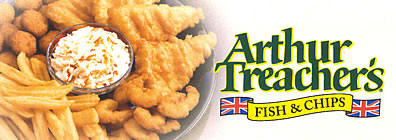
Arthur Treacher's brings old England's national snack of batter-fried fish escorted by huge fries to these shores to satisfy All-American appetites. Don't forget a dash of malt vinegar!
Did you know fish and chips were the first convenience food?
Back in the 1860s, a London restaurant called Malin's of Bow began serving deep-fried whitefish with a dousing of malt vinegar accompanied by oversized fries. The fish and chips craze soon spread throughout England, and the dish became the world's first convenience food.
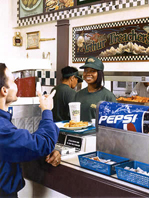 In 1969 the founders of Arthur Treacher's purchased Malin's and with it, the original fish and chips recipe. Since then we've adjusted the menu to accommodate American tastes and expanded it to include shrimp, clams, fried chicken, and popular side orders including tasty hush puppies and unique cole slaw. All of which makes Arthur Treacher's Fish & Chips the traditional English meal perfect for today's All-American appetite!
If you're considering an Arthur Treacher's Fish & Chips or Pudgie's Famous Chicken franchise, you may already have realized we are not like any other franchise.
As our business partners, our franchisees bring classic food brands into the neighborhoods they serve. Both Arthur Treacher's Fish & Chips and Pudgie's Famous Chicken have extraordinary market awareness; both have been advertised for decades, and have built up powerful customer loyalty by maintaining unique positions in the market and meeting customers' needs.
Arthur Treacher's Fish & Chips and Pudgie's Famous Chicken can be purchased as stand alone concepts, or co-branded together. Co-branded takes advantage of the synergies in the customer base and sales daypart. Operationally, the brands work well together; minimal additional equipment is required to prepare the other's menu. They complement each other well in terms of traffic management, bringing in a lunch-time crowd craving fish, and a dinner crowd with fried chicken in mind. All of this is back by a senior management and operation support team who's there 24/7 to help its franchisees grow their business.
These are just a few of the many reasons you might want to consider joining our franchise community.
The information presented may have changed since first published. We recommend that you always verify fees, investment amounts and offers with the business opportunity directly prior to making a decision to invest.
1. What training and ongoing support do you provide?
You want to know what happens after you pay the initial fee. A strong franchisor provides comprehensive pre-opening training, site-selection help, operational playbooks, and continuous assistance with marketing, technology, and supply chains.
2. What is the total initial investment, and did actual startup costs match the estimates in Item 7 of the FDD?
The Franchise Disclosure Document (FDD) lists estimated startup costs in Item 7, but real-world expenses can run higher. Asking how closely current owners tracked to these estimates reveals if you need extra working capital or if hidden fees exist.
3. How do royalties and local/national marketing fees impact profitability?
You need to understand ongoing financial obligations-such as monthly royalty percentages and ad fund contributions-and evaluate whether the brand value and support justify cutting into your profit margins.
4. What are the common challenges new franchisees face, and how do you help them overcome them?
Transparent franchisors will openly discuss real hurdles like local competition, tight labor markets, or supply chain bottlenecks, and show you the exact playbook or field support they offer to solve them as well as allowing you to speak with other franchisees.
5. How many franchise locations have closed or left the system in the past few years, and why?
High turnover, store closures, or quiet franchise exits are major red flags. This question measures system stability, territory health, and whether the corporate team addresses struggling owners or lets them fail.

 Food and Beverage Franchises