

If you are looking for information on the Baby Safe Homes franchise business opportunity, Baby Safe Homes franchises or Baby Safe Homes franchising, then you have come to the right place.

Like most successful business ventures, Baby Safe Homes is truly unique. It is different from any other child-related franchise offering ... and it's better.
Most baby-proofing companies limit their services to product sales only. We do much more, and that means you can too. With the help of Baby Safe Homes, you'll be able to offer families in your area the unique consulting and solution services that are simply not available in most markets. Further, the growing trends related to children suggest that the future prospects for baby-proofing services will continue to steadily increase.
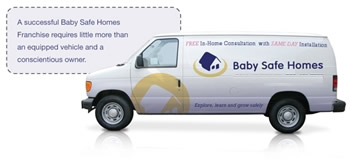
Because Baby Safe Homes Corporate Office provides so many operational and administrative services to their Franchisees, starting and operating a Baby Safe Homes business is affordable and manageable. In fact, most franchisees operate Baby Safe Homes businesses directly from their primary residences, so start up costs are less. You can begin operating a Baby Safe Homes business with no more than a minimal amount of purchased inventory, an approved vehicle and completion of our extensive training program. Once you begin operating in your area, you will enjoy tremendous support from the Corporate Office in operational areas such as:
1. What does my investment include?
The investment to open and operate a Baby Safe Homes franchise includes complete training in the Baby Safe Homes consulting, sales and installation process. As a franchisee, you will be provided with the latest franchise support technology; including a reliable infrastructure and a comprehensive marketing strategy.
2. Why should I buy a Baby Safe Homes franchise instead of another franchise?
Here are some reasons why a Baby Safe Homes franchise is right for you:
3. What type of background do I need to run a successful Baby Safe Homes franchise?
A successful Baby Safe Homes franchisee can be anyone from a multitude of backgrounds. Baby Safe Homes will provide you with the proper training and education on the latest child safety practices. If you aren't handy with tools, don't worry. Our complete training program will teach you the skills you will need to properly install and service every product we sell. We do ask, however, that you are dedicated to customer service and that you find joy in making a house safe for children.
4. What level of commitment do I need to dedicate to my Baby Safe Homes franchise?
Baby Safe Homes offers a very high level of flexibility and autonomy that will allow you to manage your franchise in a way that works best for you. That includes working independently or hiring support staff and/or additional consultants / installers.
5. Does Baby Safe Homes offer protected territories?
Yes, your awarded territory is yours to exclusively market your business.
6. What equipment and supplies do I need to start a Baby Safe Homes franchise?
As a new Franchisee, it is required that you possess an approved vehicle for exclusive use with your Baby Safe Homes business. While many new Franchisees may already own an adequate vehicle, it may be necessary to purchase or lease a proper vehicle. Additionally, it is required that each Franchisee purchase initial inventory adequate to begin operations in their territory.
The information presented may have changed since first published. We recommend that you always verify fees, investment amounts and offers with the business opportunity directly prior to making a decision to invest.
1. What training and ongoing support do you provide?
You want to know what happens after you pay the initial fee. A strong franchisor provides comprehensive pre-opening training, site-selection help, operational playbooks, and continuous assistance with marketing, technology, and supply chains.
2. What is the total initial investment, and did actual startup costs match the estimates in Item 7 of the FDD?
The Franchise Disclosure Document (FDD) lists estimated startup costs in Item 7, but real-world expenses can run higher. Asking how closely current owners tracked to these estimates reveals if you need extra working capital or if hidden fees exist.
3. How do royalties and local/national marketing fees impact profitability?
You need to understand ongoing financial obligations-such as monthly royalty percentages and ad fund contributions-and evaluate whether the brand value and support justify cutting into your profit margins.
4. What are the common challenges new franchisees face, and how do you help them overcome them?
Transparent franchisors will openly discuss real hurdles like local competition, tight labor markets, or supply chain bottlenecks, and show you the exact playbook or field support they offer to solve them as well as allowing you to speak with other franchisees.
5. How many franchise locations have closed or left the system in the past few years, and why?
High turnover, store closures, or quiet franchise exits are major red flags. This question measures system stability, territory health, and whether the corporate team addresses struggling owners or lets them fail.

